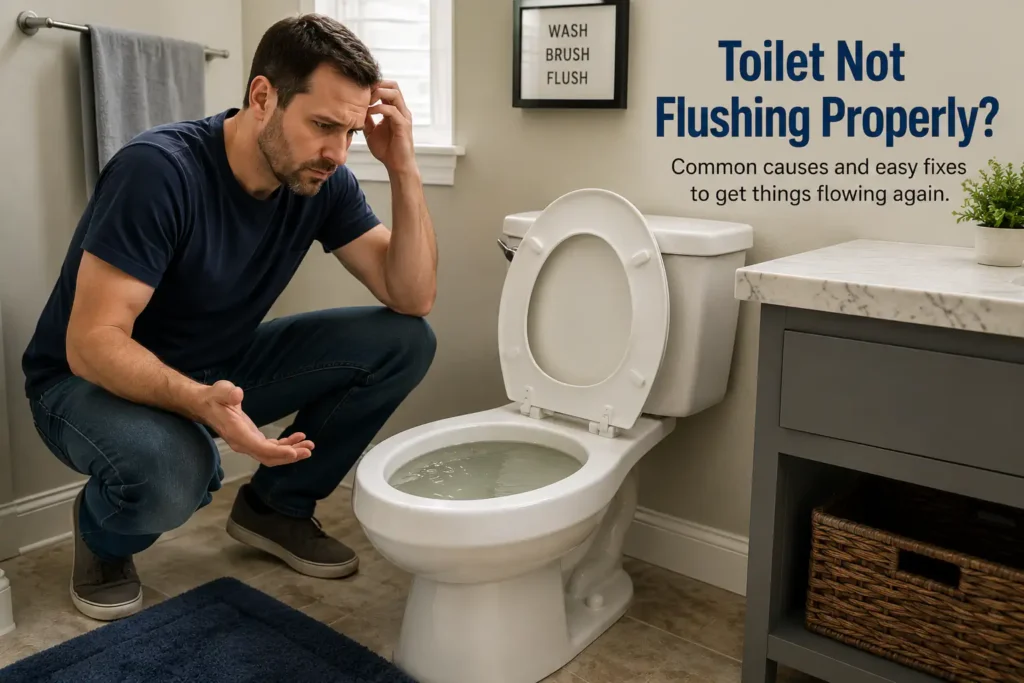
A toilet that does not flush properly can be frustrating, especially when the bowl fills with water, waste remains behind, or you have to flush two or three times to get everything down.
The good news is that a weak or incomplete flush does not always mean you need a new toilet. The problem can be as simple as a low tank water level, a partially closed shutoff valve, or a worn flapper. In other cases, mineral buildup, a clogged trapway, or a blocked vent or drain line may be responsible.
This guide explains the most common reasons a toilet is not flushing properly, what you can safely check yourself, and when it is time to call a plumber.
Quick Answer: Why Is My Toilet Not Flushing Properly?
The most common causes include:
- Low water level in the toilet tank
- A partially closed water supply valve
- A worn, dirty, or poorly adjusted flapper
- A loose or damaged flush handle or chain
- Mineral buildup in the rim holes or jet openings
- A partial clog in the toilet trapway
- A blocked drain or sewer line
- A blocked plumbing vent
- Problems with the fill valve or flush valve
- An older or poorly performing toilet
The symptoms can help you narrow down the cause. A toilet that flushes weakly may have restricted water flow, while a toilet that fills but does not drain is more likely dealing with a blockage.
The Toilet Tank Water Level Is Too Low
A toilet needs enough water in the tank to deliver a strong flush.
When you press the handle, water moves rapidly from the tank into the bowl. That water creates the force needed to push waste through the trapway and into the drain.
If the tank does not fill to the proper level, the flush may be weak or incomplete.
What to Check
Remove the tank lid and look at the water level.
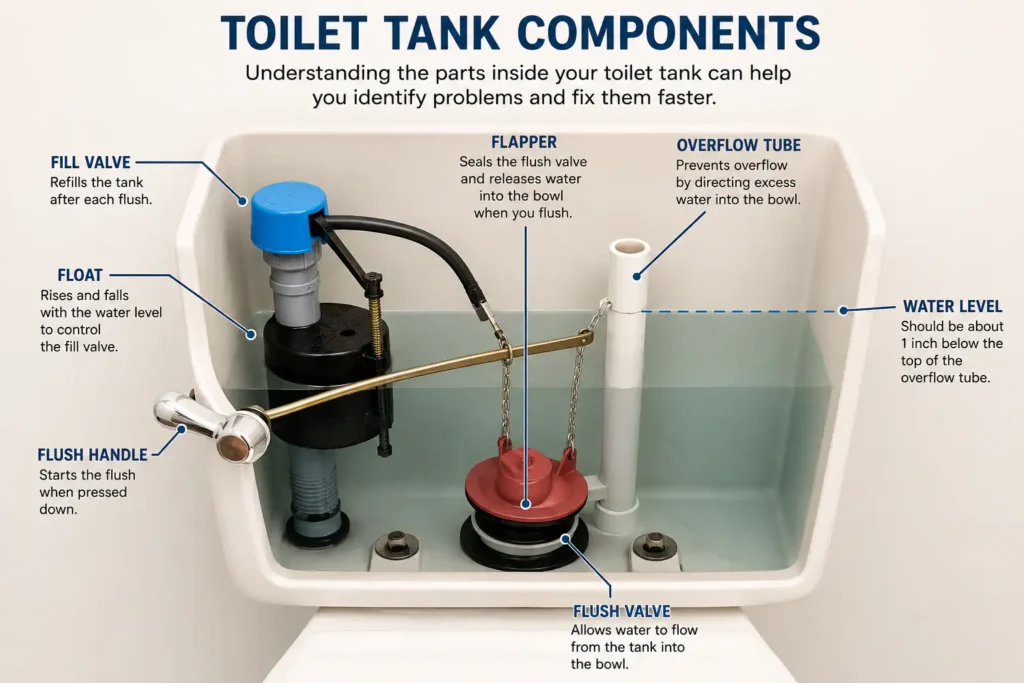
Many toilets have a marked waterline inside the tank. On models without a clear marking, the manufacturer’s instructions should be used. EPA WaterSense guidance commonly recommends setting the refill level about 1 inch below the top of the overflow tube for tank-type toilets.
Also check whether the water supply shutoff valve near the floor or wall is fully open.
A partially closed valve can restrict the amount of water available to the toilet.
Possible Solution
If the tank water is too low, the float or fill valve may need adjustment. If the fill valve is dirty, damaged, or failing to shut off properly, replacement may be necessary.
The Flapper Is Worn or Not Opening Properly
The flapper is the rubber or silicone seal inside many toilet tanks. It covers the flush valve opening and lifts when you press the handle.
If it is worn, dirty, misaligned, or improperly adjusted, the toilet may not release water correctly.
A flapper can also cause a different problem: water slowly leaking from the tank into the bowl.
EPA WaterSense notes that old or worn flappers are a common source of toilet leaks.
Signs of a Flapper Problem
You may notice:
- The toilet runs after flushing
- The tank refills by itself
- The flush is weak
- The flapper closes too quickly
- The chain is tangled or too tight
- The flapper does not lift fully
Check that the chain has enough slack to allow the flapper to close, but not so much that the handle fails to lift it properly.
If the rubber has deteriorated or the seal is no longer reliable, replacing the flapper is usually inexpensive.
The Flush Handle or Chain Is Not Working Correctly
Sometimes the toilet itself is fine—the handle mechanism is the problem.
When you press the handle, it should lift the flapper or activate the flush valve fully.
A loose chain, disconnected chain, broken lever, or incorrectly adjusted mechanism can prevent a full flush.
Try This
Take off the tank lid and press the handle while watching the mechanism.
Does the flapper lift fully?
Does the chain move freely?
Does the handle feel loose?
If the chain has come off, reconnecting it may solve the problem. If the lever or internal mechanism is damaged, the part may need to be replaced.
The Toilet Has a Partial Clog
A toilet does not have to be completely blocked to have a clog.
A partial obstruction can allow water to drain slowly while preventing the toilet from producing a strong flush.
Common symptoms include:
- The bowl water rises higher than normal
- The water drains slowly
- Waste does not clear completely
- The toilet needs multiple flushes
- The problem gets worse over time
The obstruction may be in the toilet’s internal trapway rather than directly in the bowl.
What to Do
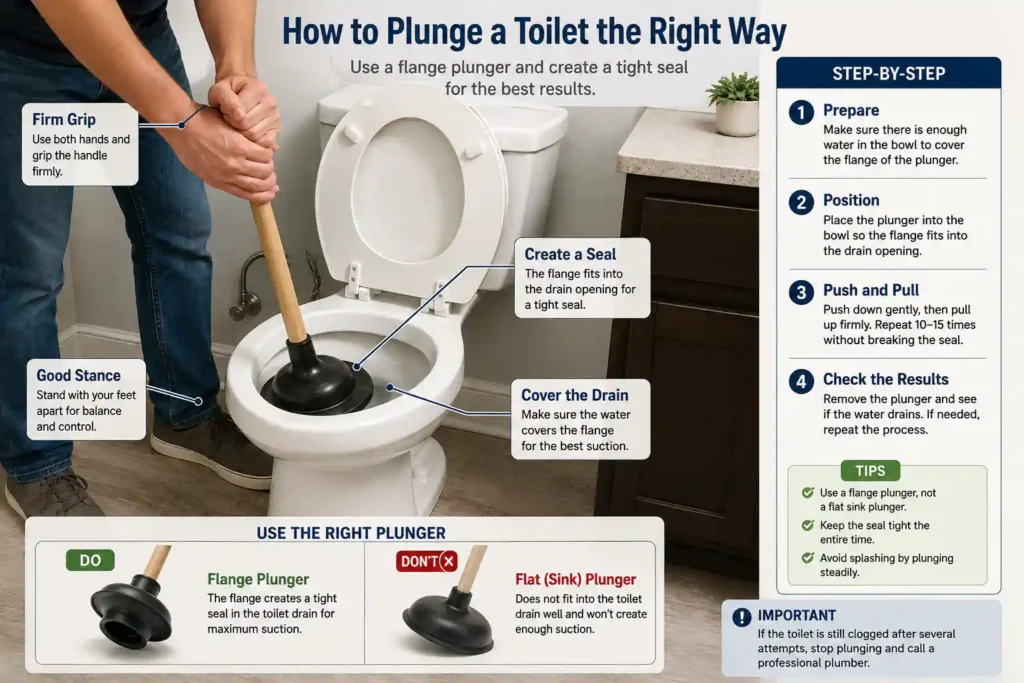
A flange-style toilet plunger is usually a better choice for a toilet than a flat sink plunger because it is designed to create a seal around the toilet drain opening.
Pump the plunger firmly several times while maintaining a good seal.
Avoid repeatedly flushing a toilet when the bowl is already close to overflowing.
Mineral Buildup Is Restricting the Flush
Hard water can leave mineral deposits inside a toilet over time.
Those deposits can restrict the small openings around the underside of the bowl rim or interfere with water flow through the flush jet.
When these openings become restricted, less water enters the bowl during the flush.
The result can be a weak flush or poor bowl cleaning.
Toilet manufacturers specifically identify blocked rim holes and mineral deposits as possible causes of poor flushing performance.
Signs of Mineral Buildup
Look for:
- White, gray, or chalky deposits
- Reduced water flow around the bowl
- Poor bowl rinsing
- A toilet that used to flush well but gradually became weaker
Cleaning the affected areas may restore water flow, but severe deposits can require more thorough cleaning or professional service.
The Toilet Trapway May Be Restricted
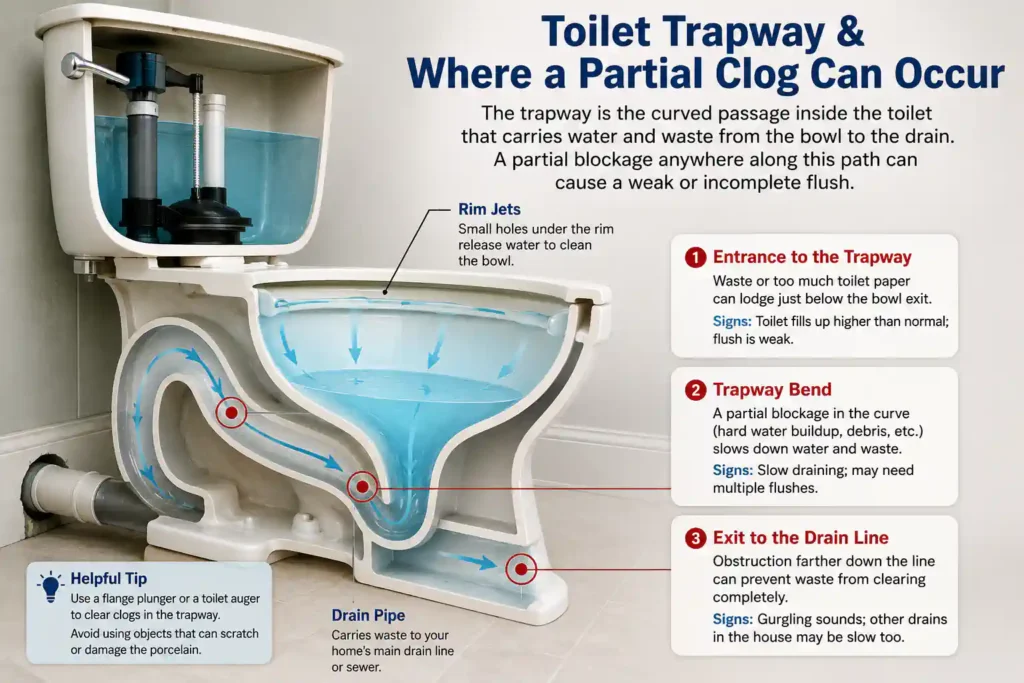
The trapway is the curved passage inside the toilet that carries water and waste from the bowl into the drain.
A partial obstruction in this passage can create a weak or incomplete flush even when the tank appears to work normally.
This can happen when an object becomes lodged inside the toilet or when buildup develops over time.
A plunger may clear a minor obstruction. If plunging does not solve the problem, a toilet auger, sometimes called a closet auger, can reach deeper into the trapway without the same risk of scratching the porcelain that some improvised tools can create.
If the obstruction keeps returning, the problem may be farther down the drain line.
The Plumbing Vent May Be Blocked
Your plumbing system needs air as well as water.
A plumbing vent allows air into the drainage system and helps maintain proper pressure as wastewater moves through the pipes.
If a vent becomes blocked, the toilet may drain poorly or flush differently.
You may notice other symptoms at the same time, such as:
- Gurgling sounds
- Slow drains
- Bubbling in the toilet bowl
- Multiple fixtures draining slowly
- Sewer odors
A vent problem is different from a simple toilet clog because the issue may affect several fixtures.
Because roof-level plumbing vents can be difficult and unsafe for homeowners to access, persistent symptoms are a good reason to have a plumber inspect the system.
The Drain or Sewer Line Could Be Partially Blocked
If more than one fixture is having drainage problems, the toilet itself may not be the source.
For example, if your:
- Toilet flushes poorly
- Bathtub drains slowly
- Shower backs up
- Bathroom sink drains slowly
- Other toilets gurgle
there could be a restriction in a larger drain line.
A developing sewer-line blockage can cause problems throughout the house.
In that situation, replacing the toilet flapper or adjusting the tank water level will not solve the underlying problem.
A plumber may use a drain camera, auger, or other diagnostic equipment to locate the obstruction.
The Fill Valve May Be Failing
The fill valve controls the flow of fresh water into the toilet tank after you flush.
If it is clogged, worn, or malfunctioning, the tank may fill too slowly or fail to reach the correct water level.
You might notice that:
- The tank takes a long time to refill
- The toilet is difficult to flush again quickly
- Water continues running
- The tank never reaches its normal water level
- The fill valve makes unusual noises
A faulty fill valve may need cleaning or replacement.
The Water Supply Valve May Not Be Fully Open
Look behind or beside the toilet for the small shutoff valve connected to the water supply line.
If it is partially closed, the toilet may not receive enough water to refill the tank properly.
This is one of the easiest things to check.
Turn the valve carefully toward the fully open position if it is not already open.
Do not force a stuck or corroded valve. An old shutoff valve can leak or fail when disturbed, and replacing it may be a job for a plumber.
The Toilet May Have an Outdated or Poor-Performing Design
Not every weak flush is caused by a broken component.
Older toilets can have different flushing characteristics than newer models. Early low-flow toilets developed a reputation for poor flushing performance, although toilet designs have improved considerably.
EPA WaterSense notes that manufacturers have redesigned modern high-efficiency toilets to combine water efficiency with improved flushing performance.
If your toilet is old and requires repeated flushing even after it has been properly maintained, replacement may make more sense than repeatedly repairing it.
Toilet Not Flushing vs. Toilet Not Flushing Completely
These symptoms can point to different problems.
If the Toilet Does Not Flush at All
Check:
- Flush handle
- Chain
- Flapper or flush valve
- Tank water
- Water supply
A disconnected chain or failed flush mechanism is a common place to start.
If the Toilet Flushes but Is Weak
Check:
- Tank water level
- Water supply valve
- Flapper operation
- Rim holes
- Flush jet
- Partial blockage
If the Toilet Flushes but Waste Remains
The problem may involve:
- A weak flush
- Partial trapway blockage
- Restricted rim or jet openings
- Drain-line obstruction
- Plumbing vent problems
If the Bowl Fills but Drains Slowly
Think blockage first.
A partial clog in the trapway or drain line is more likely than a simple tank problem.
If the Toilet Gurgles
Look beyond the toilet.
Gurgling can indicate a drainage or venting problem, particularly when other fixtures are also slow or noisy.
How to Fix a Toilet That Is Not Flushing Properly
You can work through a simple diagnostic sequence before calling a plumber.
Step 1: Check the Water Supply
Make sure the shutoff valve is open.
Step 2: Check the Tank Water Level
Remove the tank lid and compare the water level with the manufacturer’s waterline.
Step 3: Test the Handle and Flapper
Make sure the handle lifts the flushing mechanism fully and the chain is connected correctly.
Step 4: Try a Toilet Plunger
If the bowl drains slowly or appears partially blocked, use a flange plunger and avoid repeated flushing that could cause an overflow.
Step 5: Look for Mineral Buildup
Check the rim holes and visible water passages for deposits that could restrict flow.
Step 6: Check Other Drains
Run nearby sinks and showers.
If several fixtures are slow, the problem may be in the drain or sewer system rather than the toilet.
Step 7: Call a Plumber if the Problem Persists
If the basic checks do not identify the problem, professional diagnosis can prevent you from replacing parts that are not actually causing the issue.
When Should You Call a Plumber?
A toilet problem deserves professional attention when:
- The toilet repeatedly clogs
- The bowl nearly overflows
- Several drains are slow
- The toilet gurgles
- Sewage backs up into the tub or shower
- You suspect a sewer-line blockage
- The toilet leaks around its base
- The tank or bowl is cracked
- The problem returns after plunging
- You cannot identify the cause
- A shutoff valve is stuck or leaking
A plumber can determine whether the problem is limited to the toilet or connected to the home’s drainage, vent, or sewer system.
How Much Does It Cost to Fix a Toilet That Won’t Flush?
The cost depends heavily on the cause.
A simple adjustment or small replacement part can be relatively inexpensive. A blocked trapway may require more work. Problems involving a drain line, sewer line, vent, or damaged toilet can cost considerably more.
Before approving a repair, ask the plumber:
- What is causing the flushing problem?
- Is the problem inside the toilet or farther down the drain?
- Can the existing toilet be repaired?
- What parts need to be replaced?
- Is there a diagnostic or service-call fee?
- Is the estimate written?
- Could there be additional charges if the blockage is farther down the line?
For more complicated problems, getting a written estimate can help you compare plumbing services.
Should You Repair or Replace the Toilet?
Repair usually makes sense when the problem is a replaceable component such as a:
- Flapper
- Fill valve
- Flush valve
- Handle
- Chain
Replacement may make more sense when the toilet has:
- A cracked bowl or tank
- Persistent flushing problems
- Repeated blockages
- Significant mineral buildup
- Difficult-to-find replacement parts
- Poor performance despite repairs
A newer WaterSense-labeled toilet may also reduce water use while providing good flushing performance. EPA WaterSense maintains performance and efficiency criteria for labeled residential toilets.
A Simple Toilet Troubleshooting Checklist
Before calling a plumber, check these items:
- Is the water supply valve fully open?
- Is the tank filling to the proper level?
- Is the flush handle working?
- Is the chain connected and properly adjusted?
- Does the flapper lift completely?
- Does the bowl drain normally?
- Have you tried a flange plunger for a suspected clog?
- Are there mineral deposits around the rim or flush openings?
- Are other drains in the home also slow?
- Is the toilet gurgling?
- Is water leaking around the toilet base?
If several fixtures are affected, don’t assume the toilet itself is the problem.
Frequently Asked Questions
Why Is My Toilet Not Flushing All the Way?
A toilet that does not flush completely may have low tank water, a restricted flush valve, mineral buildup, a partial clog, or a problem with the drain or vent system.
Why Does My Toilet Flush Weakly but Isn’t Clogged?
Check the tank water level, water supply valve, flapper, rim holes, and flush jet. Mineral buildup can also restrict the flow of water into the bowl.
Why Won’t My Toilet Flush but Isn’t Clogged?
If the bowl drains normally but the flush itself is weak, the problem may be in the tank or flush mechanism rather than a clog. Check the handle, chain, flapper, flush valve, and tank water level.
Why Does My Toilet Need Two Flushes?
Repeated double flushing can happen when the toilet has restricted water flow, a partial blockage, mineral buildup, or simply does not provide enough effective flushing performance for the amount of waste being cleared.
Why Does My Toilet Gurgle When I Flush?
Gurgling can indicate air movement caused by a drainage or venting problem. If other fixtures are also slow or gurgling, have the plumbing system inspected.
Can Low Water Pressure Cause a Toilet to Flush Poorly?
It can contribute to slow tank refill and may prevent the tank from reaching its normal water level. However, a weak flush can have many other causes, including clogs, mineral buildup, and problems with the flush mechanism.
How Do I Know If My Toilet Has a Partial Clog?
Common signs include a slow-draining bowl, water rising higher than normal during a flush, incomplete waste removal, repeated clogging, or a toilet that flushes better after plunging.
When Should I Stop Trying to Fix the Toilet Myself?
Stop if the bowl is close to overflowing, the problem involves multiple fixtures, sewage is backing up, the toilet is leaking around its base, a pipe or valve is damaged, or you cannot identify the cause safely.
The Bottom Line
A toilet that is not flushing properly does not automatically need to be replaced.
Start with the simple checks: water level, shutoff valve, handle, chain, flapper, and possible clog. If those look normal, investigate mineral buildup and consider whether the problem is actually farther down the plumbing system.
The biggest clue is often the pattern of the problem. One toilet with a weak flush may have a toilet-specific issue. Several slow drains, gurgling fixtures, or sewage backup point toward a larger drainage or venting problem.
And if the problem keeps coming back, a professional diagnosis can be more cost-effective than repeatedly replacing toilet parts that were never the real cause.
For homeowners in Tucson, a local plumbing professional can inspect the toilet, drain lines, and related plumbing when a flushing problem goes beyond a simple adjustment or clog.

Leave a Reply